Convergence, the first step towards singularity

(First published in 2012)
Industry is proceeding rapidly towards complete automatisation. The number of jobs will steadily decline as more and more job functions are being automatised. Higher skilled work (development of new techniques and automatisation) will not correspond to the same amount of jobs that the techniques replace, we will see a steady net “loss” in number of jobs available, while the number of people on the planet increase. Less jobs does not mean less production, in fact we are becoming progressively better at utilising the resources available. The economy and sociology in our culture is based on a scarcity model, where people need resources and must in turn deliver “work/life-time” in return. With less jobs more people loose their “bargaining chip” as they are simply not needed to perform any work at all.
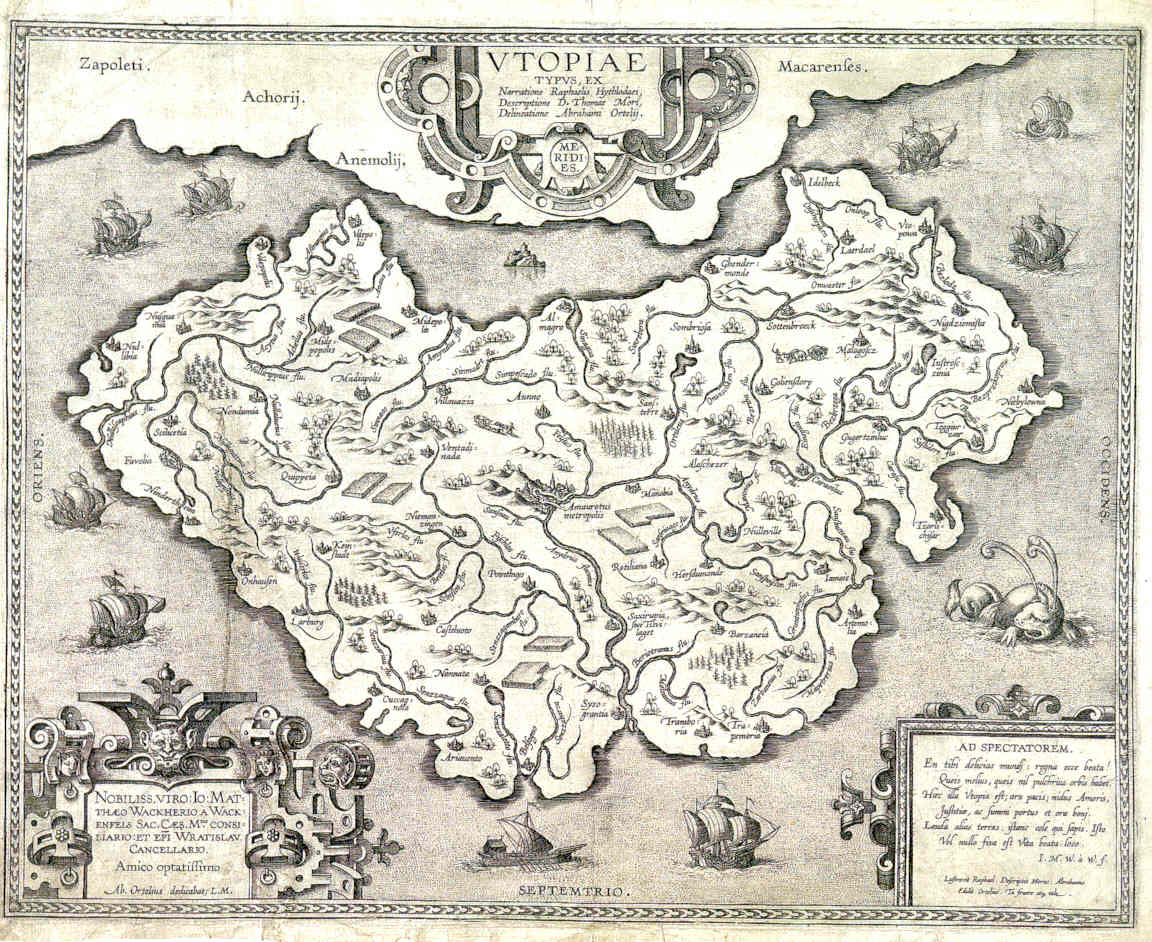
Without a new socio-economic model that gives people what they need as a basic right (food, housing and other material goods) our society will collapse as we go asymptotically towards complete automatisation and a very few number of people controlling the economy. The simplest feed-back mechanism in this scenario is that median buying-power per capita will drop to 0, and only the factory owners can trade with each other, leading to instability, revolution and what else comes with massive inequality. Instead, we could accept the automatisation as a consequence of our advancement in the understanding of the physical world and disband the current economic paradigm for a new “non-economic” model where personal access to resources is trivial, and larger scale access is managed by a direct democracy (now completely possible to implement because everybody has enough time to actively participate, being freed from the burden of income-labor). An economic-free society can only be maintained under the assumption that the amount of resources available is adequate for the number of people in the society, while non-scarcity will likely drive the birthrate down to a level as seen in Scandinavia we must still actively search for new resources to cover the continued support of the population. One obvious suggestion is that with basic life-care in place, mankind can dedicate itself and its resources to exploration beyond our planet and start harvesting the fruits of the solar system, essentially opening up to resources many orders of magnitudes more abundant than on Earth. As for what everybody should “do” with themselves if they don’t have to work, a social reprogramming must be instigated. In less than fifty years the commercial enterprises in the west have indoctrinated millions of people to want products they don’t need and live in ways that optimized profit (breaking with family structures, extensive travelling and buying leisure products all sold as “freedom and choice”) in not-perhaps the same way education of the population to find new things such as creative hobbies, scientific endeavors and cultural engagement interesting must be done.
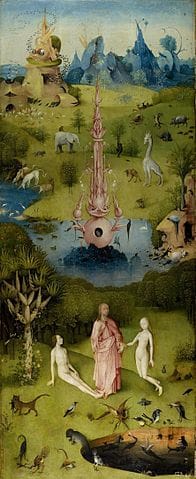
An interesting observation on this transition is that we already in many cultures throughout history have examples of people living such lives; namely the aristocracies and affluents of the world. While the hoarding of material resources and power where of importance to these people (because of the scarcity-economical structure) their leisure life has much to teach us about how to live a fulfilling life without doing (slave) labour. Many perspectives arise when envisioning such a future, both good and bad. In the good category: Assuming a healthy attitude to life from the majority of people, we can expect to see a continued golden age in all areas of art, science and where ever else human creativity can show itself. Exponential growth in scientific/technological progress in some way demands a society where progressively more people have the chance to engage in higher thinking. Believers of the transcendental “singularity” might see this happen more readily in the non-economic society. With more time for learning and reflection we can hope that the people of this world will turn into citizens directly interested in how the society is run and where to go next as a species. Continued development of the infrastructure is naturally needed and such “jobs” are unlikely to disappear, but jobs will be are and like elected officials today, could be done by draft among the citizens with special interests in such maintenance and development work. The dystopian prospects could include social depression due to a failed transition between labourer and free human, boredom or/and distrust in the system – a system that for some might seem communistic in nature, though one should note that the “commune” part only implies that everybody have equal access to everything, no plan-economy as seen in the Soviet union is implied (although resource management on a planetary scale is needed at least until the “post-Earth” scenario begins).
